Thomas Archetier
The art of bowmaking at the service of excellence for over 20 years. Repairing, creating, perfecting.
"The leading name for your bows."
About Thomas Koenig Master Bowmaker
"Since 2002, I have been based in the beautiful Montpellier region, drawn to its rich culture and, of course, its sunshine. I craft bows using all the expertise and passion that Pascal Camurat (bow maker, luthier) passed on me.
My main activity is making violin, viola, and cello bows, with a particular focus on the selection of raw materials. I primarliy use ebony and Pernambuco wood, which allow me to cater to the sensitivity, playing style, and personality of each musician.
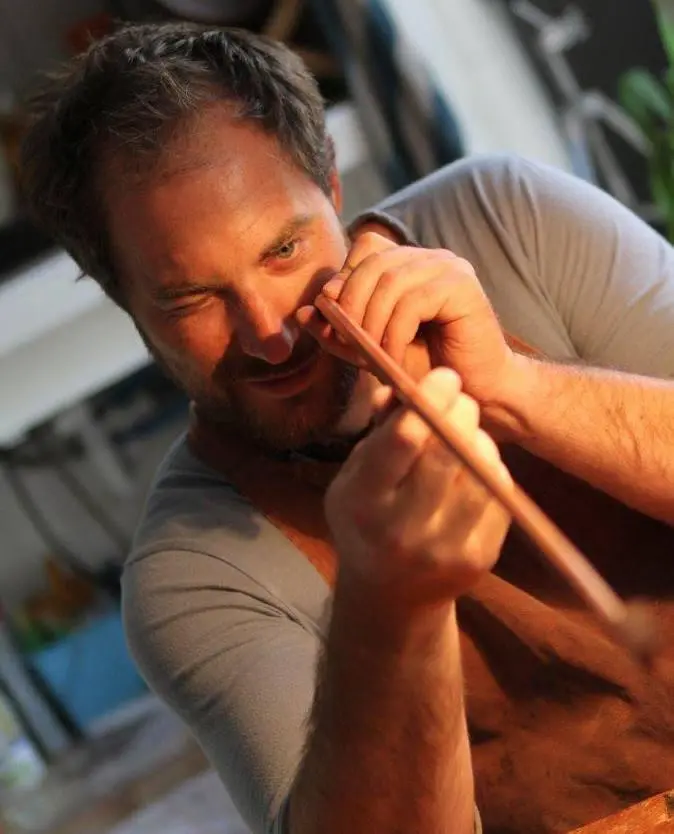

Furthermore, I attach paramount importance to the balance, camber, and weight of my instruments. I also provide expert maintenance and repairing for bows.
With my recognized experience today, I aim to reach a diverse audience—from beginners to advanced and professional musicians—offering everyone the opportunity to acquire a high-quality bow at accessible prices."
The atelier
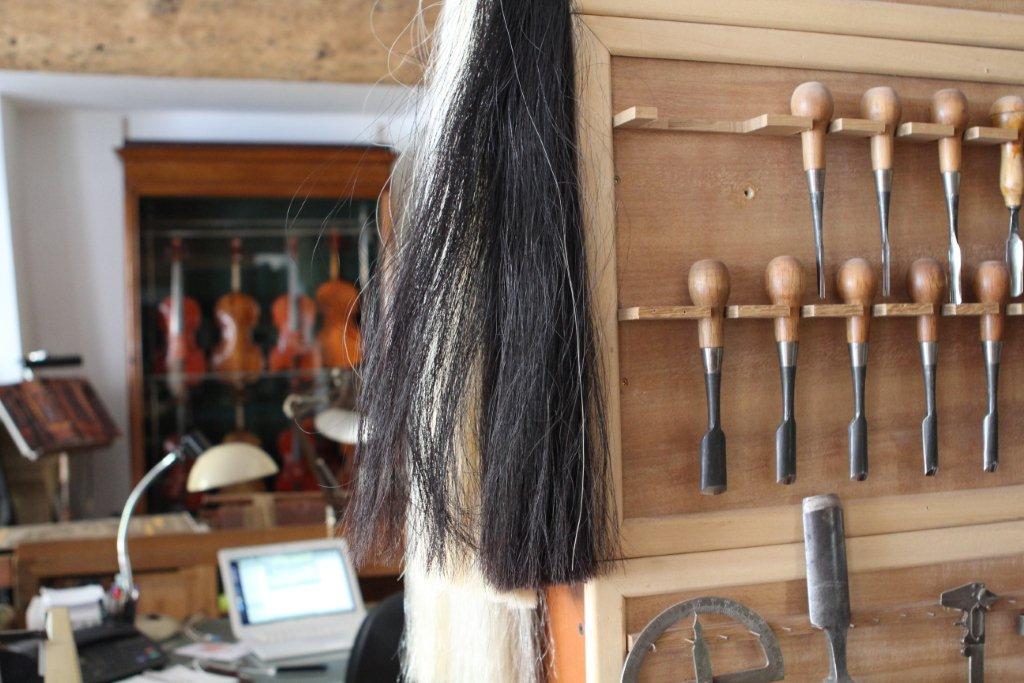
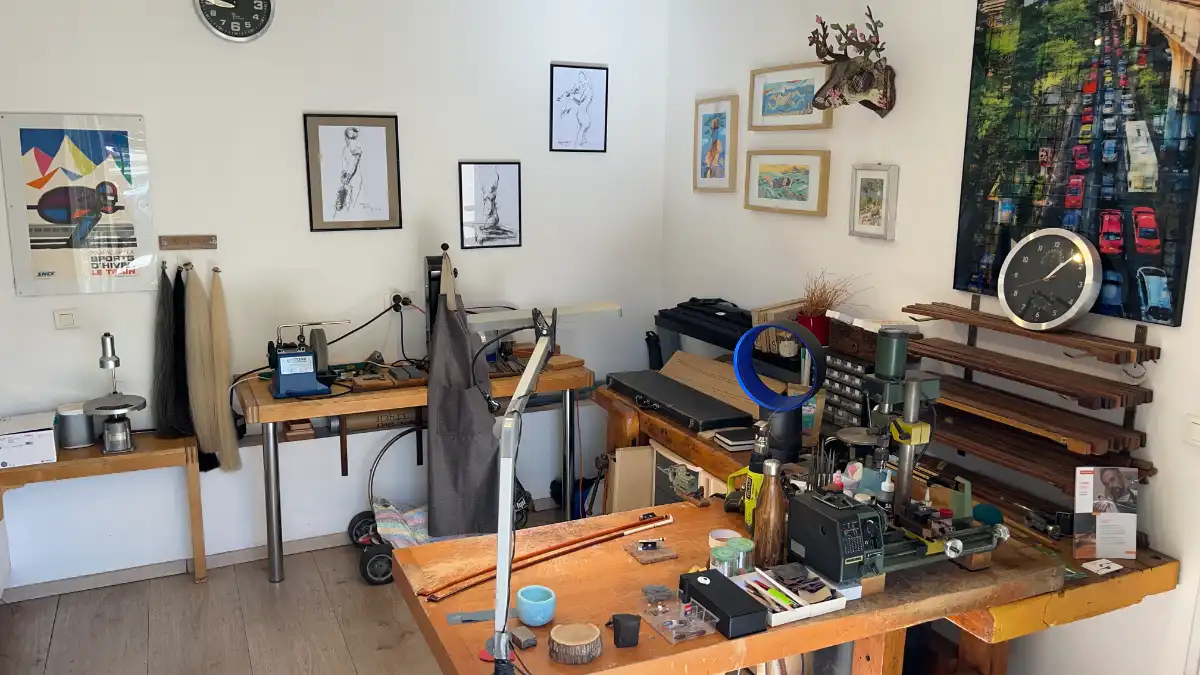
Thomas Koenig's atelier is much more than a simple repair shop: it is a space designed to blend high artisanal tradition with innovative technical solutions.
Here are a few details about his workspace in Montpellier:
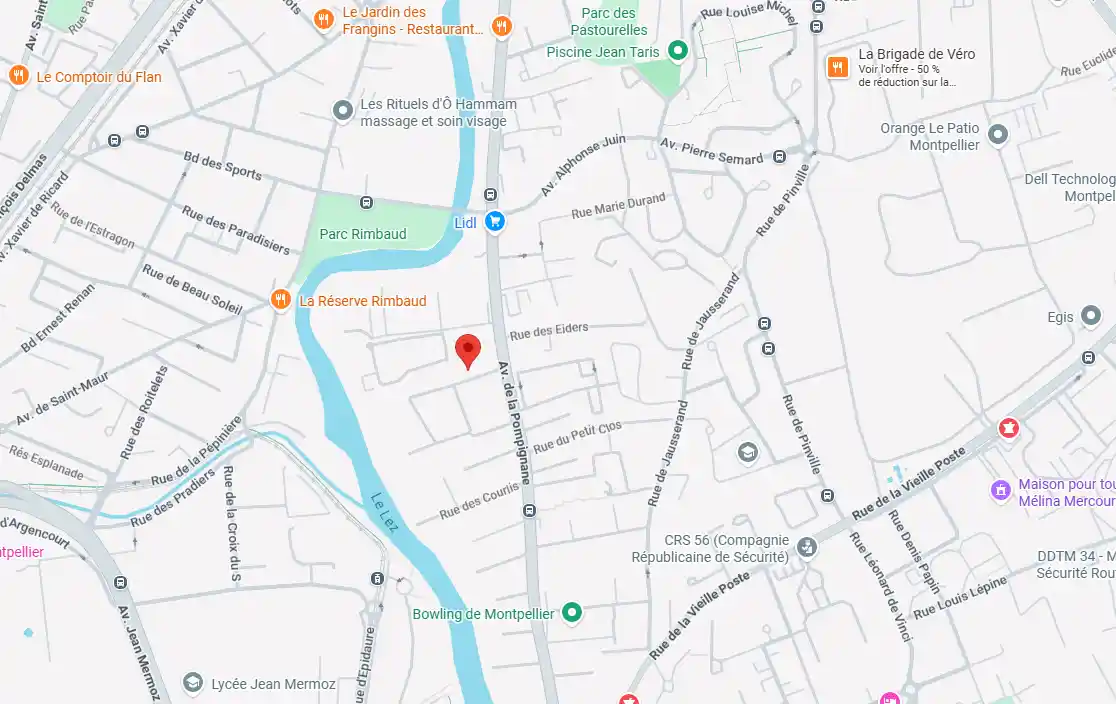
An Environment Tailored for Listening Location: His workshop is located at 64, rue du Clos de la Cerisaie, just two minutes from the Hôtel de Région (Antigone district). He describes this place as a "haven of peace," where the scent of wood and horsehair fills the air.
- Welcoming Musicians: The atelier is open Monday through Friday, from 2:00 PM to 7:00 PM. Unlike larger workshops, this is an intimate space where he takes the time to listen to the specific needs of every musician—whether they are beginners, advanced players, or orchestral soloists—to fine-tune the balance and response of the bow.
Equipment: Where Tradition Meets Technology The Thomas Koenig atelier stands out for the way it adapts its tools to his unique craftsmanship:
-
Custom-Built Workbench: Every stage of the making process—from planing the stick to fitting the frog—is performed seated. The workshop is optimized to ensure every movement, from the heat-bending process to the rehairing, is executed with millimeter precision.
-
Innovation (Laser Marking): A notable feature is his collaboration with Humanlab Saint-Pierre. To sign his bows (a process traditionally requiring great strength and stability for the "hot iron" stamp), he now uses a laser engraver. This allows him to apply his "Thomas Koenig" signature with perfect clarity, blending digital technology with fine woods.
- Noble Materials: The workshop houses rigorously selected stocks of Pernambuco (Brazil wood), as well as ebony, silver, and mother-of-pearl for crafting the frogs.
Craftmanship
1. The Choice of Wood: Pernambuco The gold standard material is Pernambuco (Caesalpinia echinata). It is prized for its density, strength, and remarkable ability to transmit vibrations at an impressive speed.
-
Selection: The bowmaker carefully selects a straight piece of wood, free of knots, with perfectly linear grain.
-
Seasoning: The wood must season for years—sometimes even decades—to achieve perfect stability before being crafted.
2. Profiling and Shaping The bowmaker works the raw stick using planes, rifflers (specialized files), and scrapers.
-
Tapering: A bow stick is not a uniform cylinder. It is thicker toward the handle (frog end) and gradually tapers toward the head. This progression is vital for proper balance.
-
Balancing: The bowmaker shifts the center of gravity by removing material, ensuring the bow is neither "top-heavy" nor "heel-heavy."
3. Heat-Bending (The Cambering Process) This is arguably the most impressive stage. The stick is heated gradually over a flame (usually an alcohol lamp or a gas burner) to be bent into shape.
-
The Art of Heat: By heating the wood, its fibers become malleable. The bowmaker gives the stick a specific camber (a concave curvature).
-
Wood Memory: Once cooled, the wood retains this shape. The tension of the hair, applied later, will counteract this curvature, allowing the musician to play with the perfect dynamic response.
4. The Head and the Frog
-
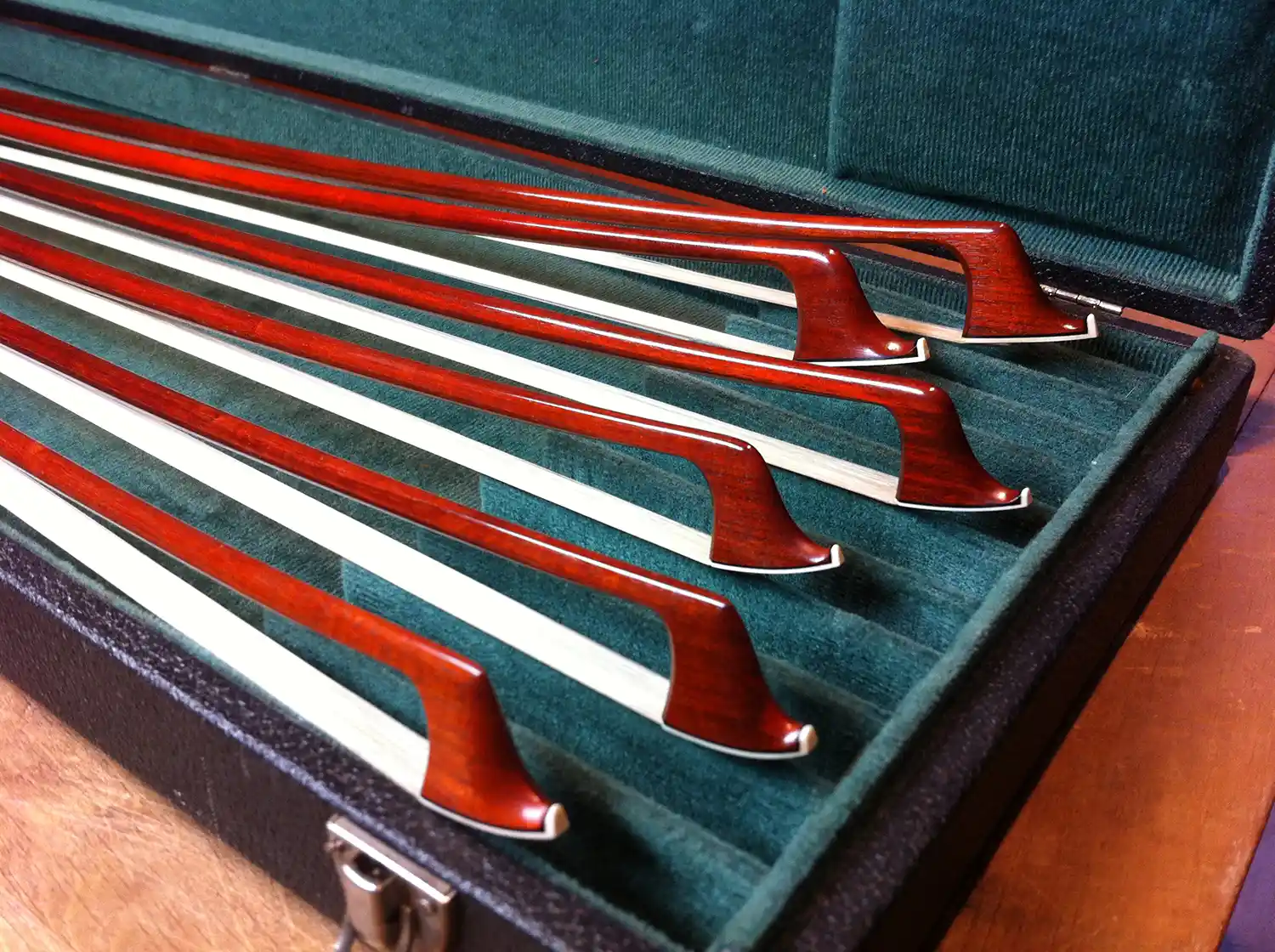
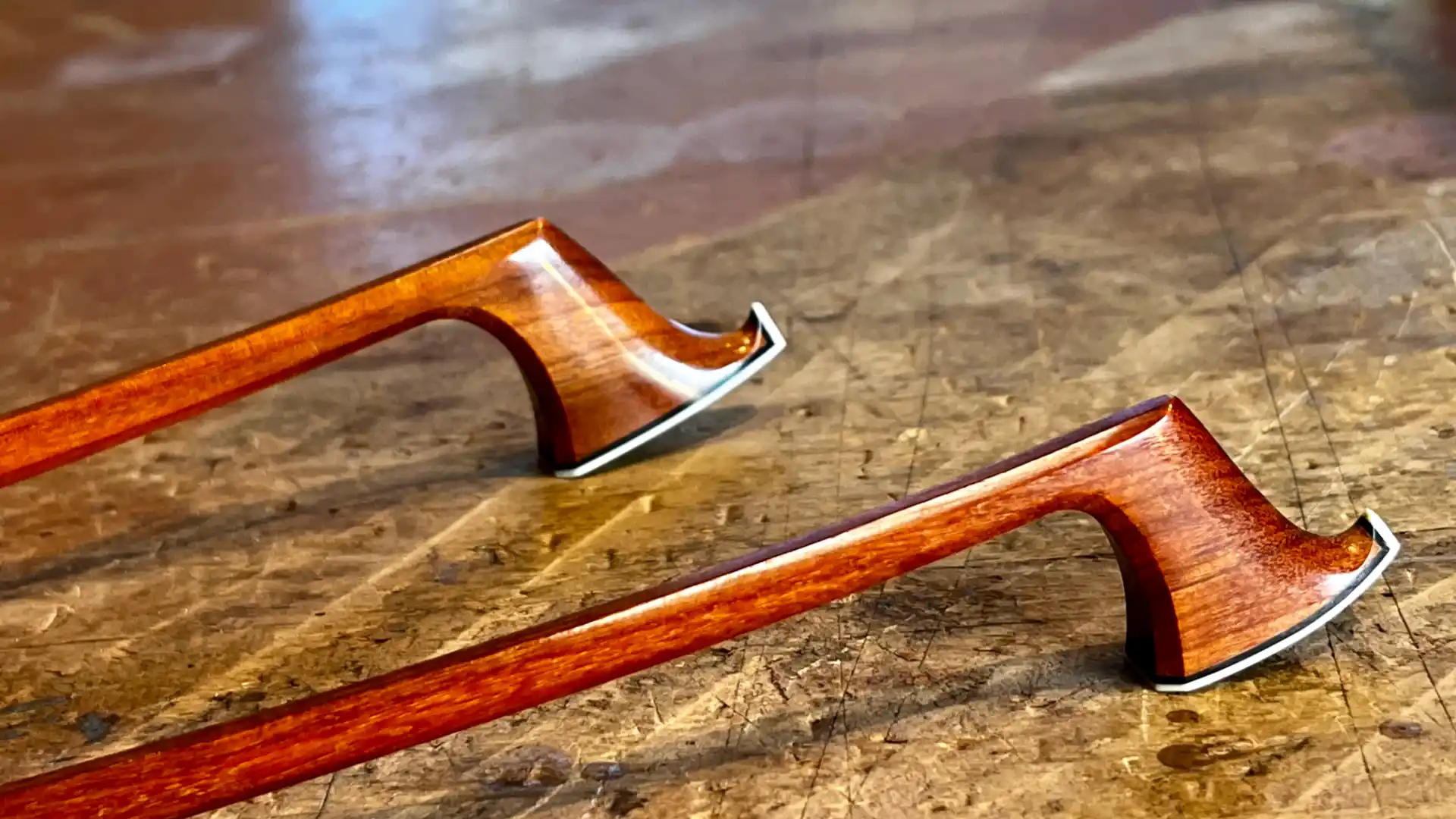
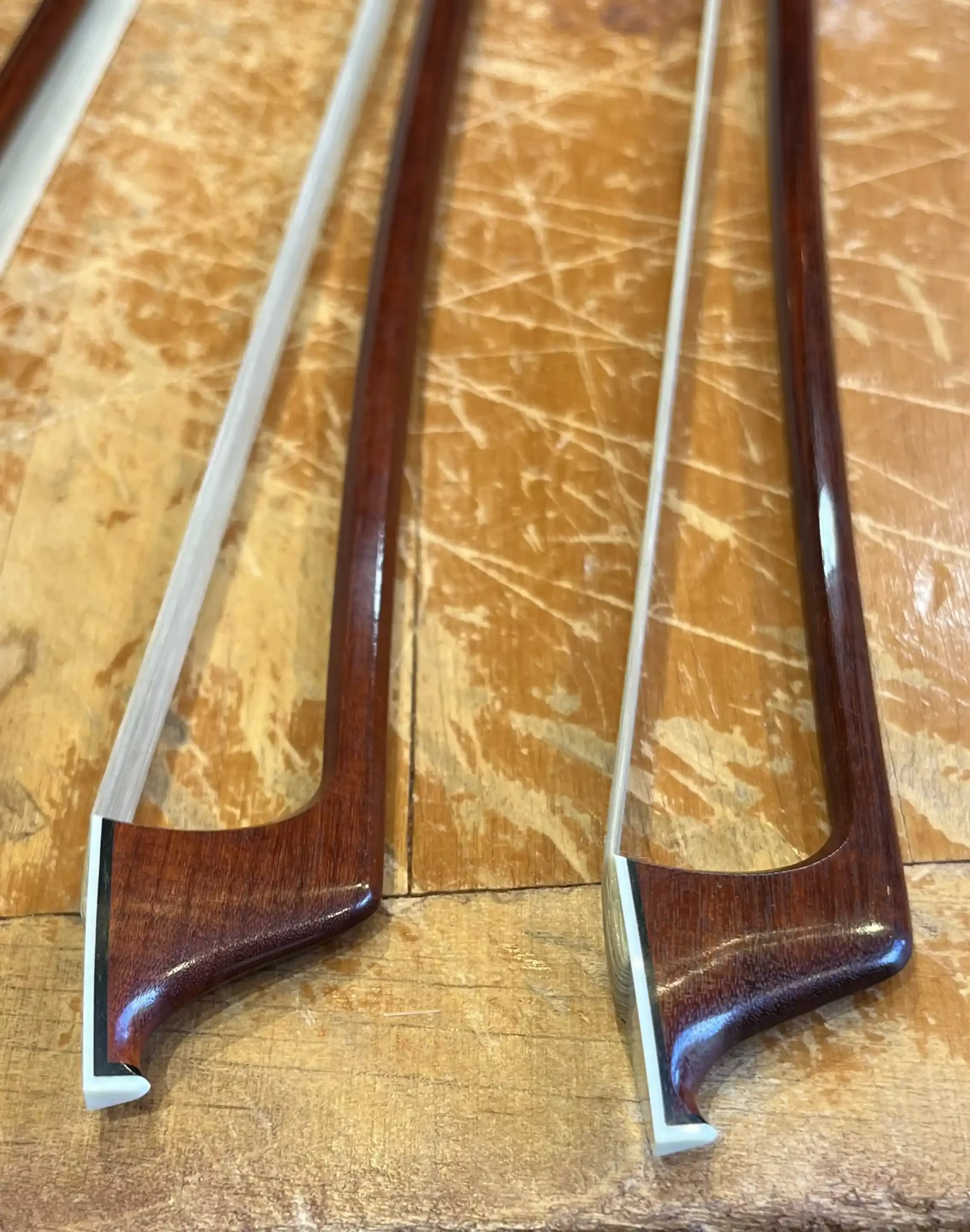
The Head: It is carved with surgical precision to accommodate the protective plate and the mortise for the hair.
-
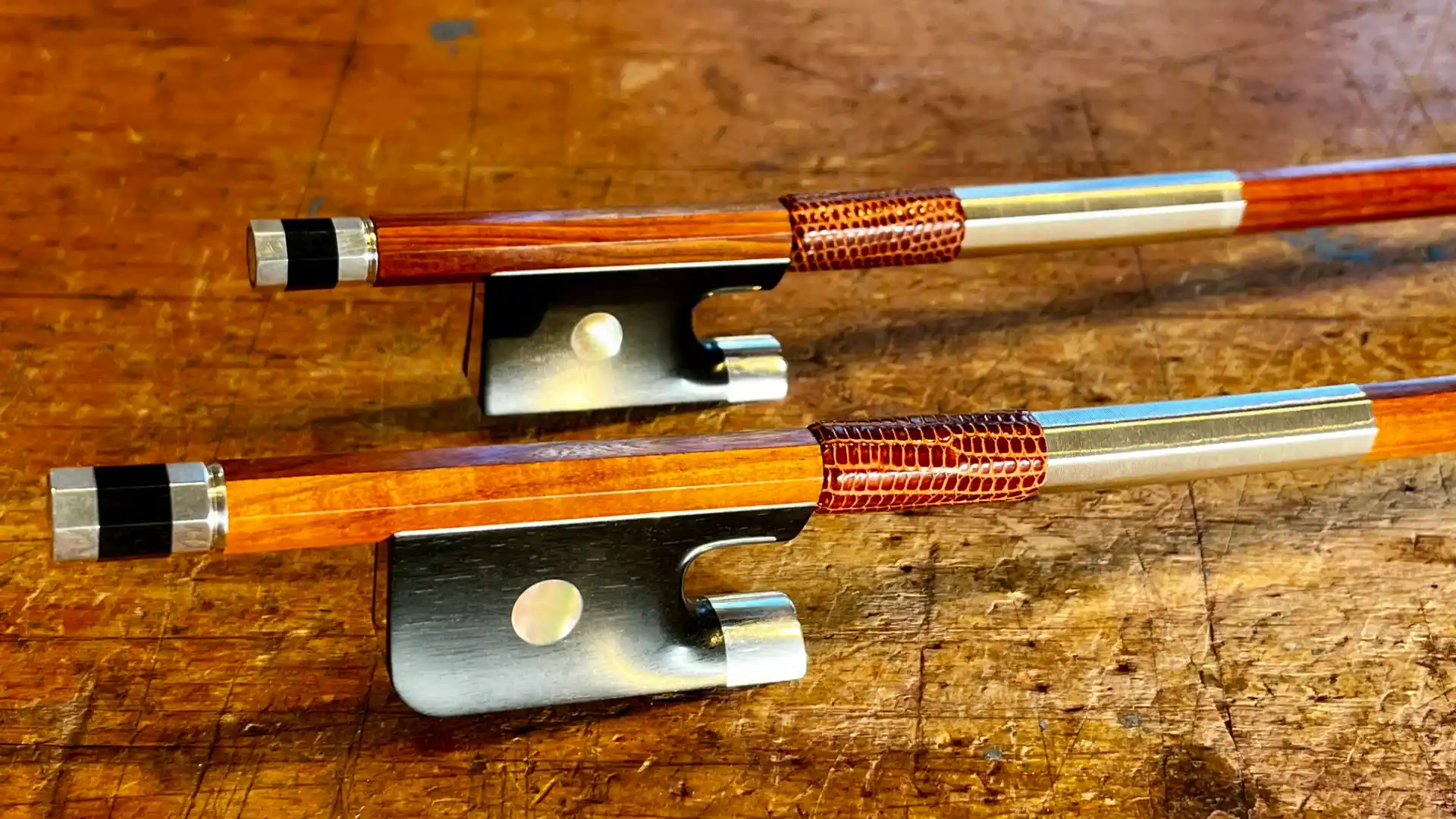
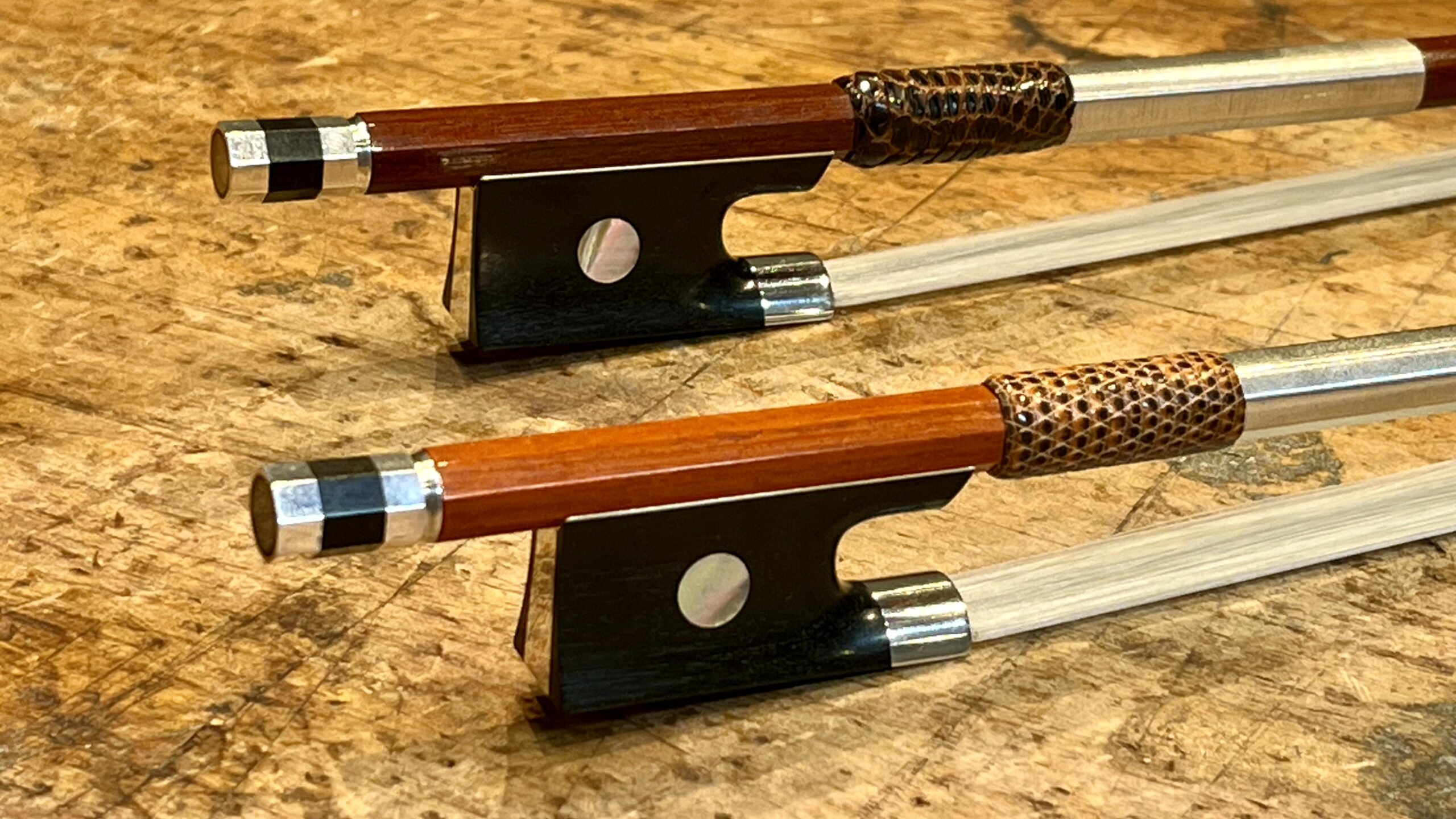
The Frog: This is the movable part that holds the hair at the musician’s hand. It is typically crafted from ebony and adorned with mother-of-pearl and precious metal (silver or gold). It houses the screw mechanism that allows the musician to adjust the tension of the bow.
5. Assembly and Hairing
-
The Choice of Hair: He uses horsehair (often sourced from Mongolia or Siberia), selected for its naturally coarse texture, which provides the necessary grip on the string.
-
The "Rehairing" Process: The bowmaker distributes the strands of horsehair with absolute precision, ensuring the tension is perfectly uniform across the entire length of the bow.
Repair
Thomas also addresses structural damage and general wear and tear:
-
Head Plate: Replacement of the protective tip at the end of the bow (historically Mammoth ivory on antique bows, now replaced with bone or high-density synthetic materials).
-
Frog Adjustments: Fine-tuning the mechanism to ensure smooth tensioning, including the replacement of the screw or nut (eyelet) when necessary.
- Rehairing: Thomas offer a professional rehairing service using only premium, unbleached horsehair for optimal grip and sound quality.
-
Straightening the Stick: Over time, or due to improper tensioning, the wood can warp or lose its alignment. Thomas uses heat to restore the stick’s original straightness and proper camber.
Contact
Thomas's Workshop open to the public from 2:00 PM to 6:30 PM Monday to Friday.
Ideally situated in Montpellier, we are just 10 minutes away from the Corum and the Opera by foot, car, or bus.